Flashing News

Image

ERP software for printing industry: Key benefits explained

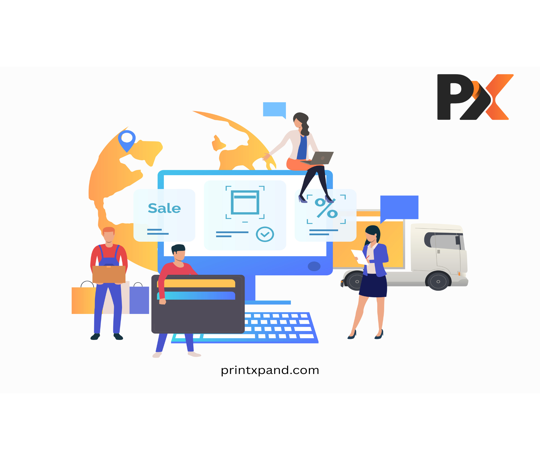
Written by Pratik Shah, Creative Head - PrintXpand The printing industry work environment is very dynamic with accuracy, speed and control of cost playing major roles. The use of manual control over various print jobs, materials, machines and delivery schedules is prone to inefficiencies and errors. This is where the ERP for printing industry comes as a necessity and not fancy. Enterprise Resource Planning systems designed specifically for print businesses help centralize operations, improve visibility, and streamline workflows. From job estimation and production scheduling to inventory control and invoicing, ERP software plays a vital role in transforming how print companies operate. In this blog, we explore the key benefits of ERP software for printing industry and explain why it is becoming a core requirement for modern print businesses. Understanding ERP for Printing Industry ERP for printing industry is the centralized software platform that brings all the main business functions of a printing company to one platform. As opposed to generic ERP systems, print focused ERP solutions are designed to support industry unique issues like variable job specification, quick turnaround, and sophisticated costing designs. These systems often work alongside or integrate with print MIS software and web to print MIS platforms to create a seamless flow of data from order placement to final delivery. ERP systems bring together various departments within an organization such as sales, production, inventory, and finance hence providing consistency and transparency in operations. Common Challenges Faced by Print Businesses It is prudent to know the difficulties that print businesses encounter on a daily basis before learning the advantages of ERP software. Most printing companies are using spreadsheets or disjointed software to track orders and production. This causes poor job costing, wastage of materials, late deliveries as well as the absence of real time visibility. Manual scheduling can lead to machine downtimes or production bottlenecks. Any type of inventory mismanagement may result in excess stock or even a sudden out-of-stock of key materials. There is also the increased expectation of customers. Customers are pressuring them to deliver faster services, correct manufacturing costs and quality services. The inability to have a centralized system makes it harder and harder to live up to these expectations. This is where mis software for printing industry integrated with ERP brings significant value. Key Benefits of ERP Software for Printing Industry Streamlined Production Planning and Scheduling Enhanced production planning can be given as one of the most critical advantages of ERP for printing industry. The ERP systems enable print companies to schedule jobs according to the availability of machines, capacity of the workforce, and delivery dates. ERP minimizes the wastage of time through automation of job sequencing and production schedules to maximize utilization of resources. Managers will be able to monitor the progress of the jobs real-time and make immediate changes when priorities are shifted. Such control assists print firms to print in time. Accurate Job Costing and Quotation Management Proper costing is a significant issue in the printing business because of the changes in the prices of materials and the different specifications of the jobs. ERP software for printing industry enables real time job costing by factoring in materials, labor, machine time, and overheads. Using precise costing information, the sales teams are able to make accurate quotations within a short duration. This minimizes the chances of quoting the jobs at a lower cost or losing business on offers that take too long to respond to. Integrated print MIS software ensures that cost estimates align with actual production data, improving profitability. Improved Inventory and Material Management ERP systems give full access to the inventory stored in warehouses and production floors. Print businesses are able to monitor the raw materials e.g. paper, ink and plates in real time. Stockouts can be prevented by automation of reorder alerts and waste can be minimized by proper monitoring of consumption. This becomes particularly useful when the quantity of print jobs, or even custom jobs is high. By integrating ERP with mis software for the printing industry, companies gain tighter control over material usage and inventory costs. Enhanced Workflow Automation and Job Tracking ERP software automates some of the repetitive jobs like creating jobs, approving workflow and updating the status. This minimizes the number of errors in manual processes and enhances efficiency in operations. All departments operate on the same data which leads to improved coordination of the sales, production, and dispatch teams. Job tracking can be done in real time and is better at enhancing accountability and detecting early delays. When combined with web to print MIS, ERP creates a smooth flow from online order placement to production and delivery. Better Order Management and Delivery Accuracy Order management is a critical area where ERP software for printing industry delivers significant value. ERP systems trace all the order stages all the way through order entry and up to final dispatch. This guarantees good order filling and prompt deliveries. The customers are constantly informed about the status of the orders, and this enhances transparency and confidence. Better customer relationships are also achieved because it results in increased accuracy on delivery and reduction of reprints and customer complaints. Real Time Visibility and Reporting ERP systems have centralized dashboards and reports which make the management have a clear picture of the business performance. Real time availability of metrics like job profitability, production efficiency, material consumption and delivery timelines are available. This information based understanding assists decision makers to detect inefficiencies, manage expenses and strategize how money will be invested in the future. These insights can enable print businesses to scale operations in a strategic manner and react fast to market changes. Quality Control and Process Consistency It is paramount that the quality is kept with the printing industry. ERP software assists in the management of quality control through standardization of the workflow and keeping production records. The system may have quality checkpoints that would guarantee adherence to the internal standards and customer demands. Past job information assists in correcting the common problems and enhancing processes in the long run. This leads to the reduction of reworks and customer satisfaction. Improved Customer Satisfaction and Retention The customers are direct beneficiaries when print business runs smoothly. The improved turnaround time, correct pricing and guaranteed delivery times improve the overall customer experience. ERP system enhances interdepartmental communication which makes sure that the requirements of the customer are well understood and implemented. In the long-term this reliability creates long term relationships with customers as well as augmenting repeat business. Conclusion ERP for printing industry is now an important tool that businesses seek to implement in an attempt to enhance efficiency, cut costs and remain competitive. ERP software, by consolidating production planning, inventory management, job costing, and reporting, enhances the print operations, which previously were fragmented into different processes, into flowing operations. When combined with web to print MIS and print MIS software, ERP systems create a powerful digital foundation for growth and scalability. The ERP solution will be of great help to print businesses intending to modernise operations and provide customers with steady value. PrintXpand can assist digital transformation of the printing industry by providing expertise in companies that aim to acquire advanced print technology solutions and integrate these systems with each other.
1 of 52. >>
Image

ERP software for printing industry: Key benefits explained

Written by Pratik Shah, Creative Head - PrintXpand The printing industry work environment is very dynamic with accuracy, speed and control of cost playing major roles. The use of manual control over various print jobs, materials, machines and delivery schedules is prone to inefficiencies and errors. This is where the ERP for printing industry comes as a necessity and not fancy. Enterprise Resource Planning systems designed specifically for print businesses help centralize operations, improve visibility, and streamline workflows. From job estimation and production scheduling to inventory control and invoicing, ERP software plays a vital role in transforming how print companies operate. In this blog, we explore the key benefits of ERP software for printing industry and explain why it is becoming a core requirement for modern print businesses. Understanding ERP for Printing Industry ERP for printing industry is the centralized software platform that brings all the main business functions of a printing company to one platform. As opposed to generic ERP systems, print focused ERP solutions are designed to support industry unique issues like variable job specification, quick turnaround, and sophisticated costing designs. These systems often work alongside or integrate with print MIS software and web to print MIS platforms to create a seamless flow of data from order placement to final delivery. ERP systems bring together various departments within an organization such as sales, production, inventory, and finance hence providing consistency and transparency in operations. Common Challenges Faced by Print Businesses It is prudent to know the difficulties that print businesses encounter on a daily basis before learning the advantages of ERP software. Most printing companies are using spreadsheets or disjointed software to track orders and production. This causes poor job costing, wastage of materials, late deliveries as well as the absence of real time visibility. Manual scheduling can lead to machine downtimes or production bottlenecks. Any type of inventory mismanagement may result in excess stock or even a sudden out-of-stock of key materials. There is also the increased expectation of customers. Customers are pressuring them to deliver faster services, correct manufacturing costs and quality services. The inability to have a centralized system makes it harder and harder to live up to these expectations. This is where mis software for printing industry integrated with ERP brings significant value. Key Benefits of ERP Software for Printing Industry Streamlined Production Planning and Scheduling Enhanced production planning can be given as one of the most critical advantages of ERP for printing industry. The ERP systems enable print companies to schedule jobs according to the availability of machines, capacity of the workforce, and delivery dates. ERP minimizes the wastage of time through automation of job sequencing and production schedules to maximize utilization of resources. Managers will be able to monitor the progress of the jobs real-time and make immediate changes when priorities are shifted. Such control assists print firms to print in time. Accurate Job Costing and Quotation Management Proper costing is a significant issue in the printing business because of the changes in the prices of materials and the different specifications of the jobs. ERP software for printing industry enables real time job costing by factoring in materials, labor, machine time, and overheads. Using precise costing information, the sales teams are able to make accurate quotations within a short duration. This minimizes the chances of quoting the jobs at a lower cost or losing business on offers that take too long to respond to. Integrated print MIS software ensures that cost estimates align with actual production data, improving profitability. Improved Inventory and Material Management ERP systems give full access to the inventory stored in warehouses and production floors. Print businesses are able to monitor the raw materials e.g. paper, ink and plates in real time. Stockouts can be prevented by automation of reorder alerts and waste can be minimized by proper monitoring of consumption. This becomes particularly useful when the quantity of print jobs, or even custom jobs is high. By integrating ERP with mis software for the printing industry, companies gain tighter control over material usage and inventory costs. Enhanced Workflow Automation and Job Tracking ERP software automates some of the repetitive jobs like creating jobs, approving workflow and updating the status. This minimizes the number of errors in manual processes and enhances efficiency in operations. All departments operate on the same data which leads to improved coordination of the sales, production, and dispatch teams. Job tracking can be done in real time and is better at enhancing accountability and detecting early delays. When combined with web to print MIS, ERP creates a smooth flow from online order placement to production and delivery. Better Order Management and Delivery Accuracy Order management is a critical area where ERP software for printing industry delivers significant value. ERP systems trace all the order stages all the way through order entry and up to final dispatch. This guarantees good order filling and prompt deliveries. The customers are constantly informed about the status of the orders, and this enhances transparency and confidence. Better customer relationships are also achieved because it results in increased accuracy on delivery and reduction of reprints and customer complaints. Real Time Visibility and Reporting ERP systems have centralized dashboards and reports which make the management have a clear picture of the business performance. Real time availability of metrics like job profitability, production efficiency, material consumption and delivery timelines are available. This information based understanding assists decision makers to detect inefficiencies, manage expenses and strategize how money will be invested in the future. These insights can enable print businesses to scale operations in a strategic manner and react fast to market changes. Quality Control and Process Consistency It is paramount that the quality is kept with the printing industry. ERP software assists in the management of quality control through standardization of the workflow and keeping production records. The system may have quality checkpoints that would guarantee adherence to the internal standards and customer demands. Past job information assists in correcting the common problems and enhancing processes in the long run. This leads to the reduction of reworks and customer satisfaction. Improved Customer Satisfaction and Retention The customers are direct beneficiaries when print business runs smoothly. The improved turnaround time, correct pricing and guaranteed delivery times improve the overall customer experience. ERP system enhances interdepartmental communication which makes sure that the requirements of the customer are well understood and implemented. In the long-term this reliability creates long term relationships with customers as well as augmenting repeat business. Conclusion ERP for printing industry is now an important tool that businesses seek to implement in an attempt to enhance efficiency, cut costs and remain competitive. ERP software, by consolidating production planning, inventory management, job costing, and reporting, enhances the print operations, which previously were fragmented into different processes, into flowing operations. When combined with web to print MIS and print MIS software, ERP systems create a powerful digital foundation for growth and scalability. The ERP solution will be of great help to print businesses intending to modernise operations and provide customers with steady value. PrintXpand can assist digital transformation of the printing industry by providing expertise in companies that aim to acquire advanced print technology solutions and integrate these systems with each other.
1 of 52. >>
sidebar image
Dhanya A K

Quicksilver Swift to Adapt to Challenges with Mimaki Technology

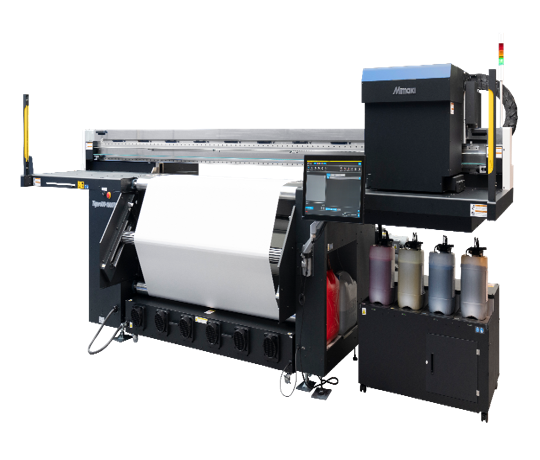
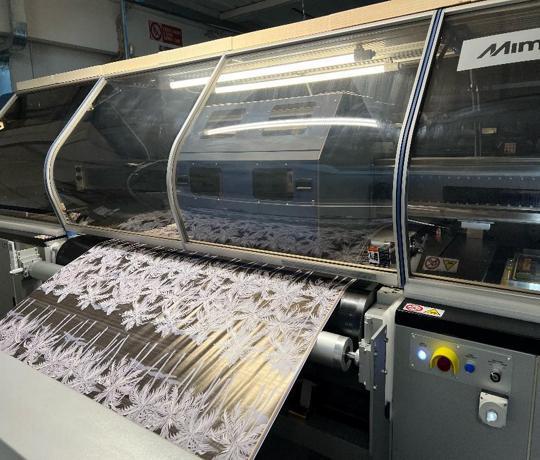
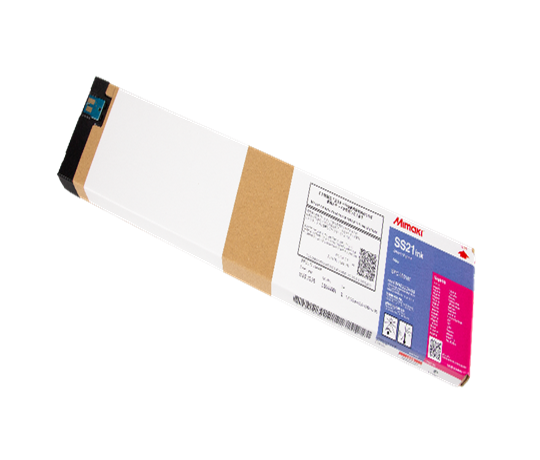
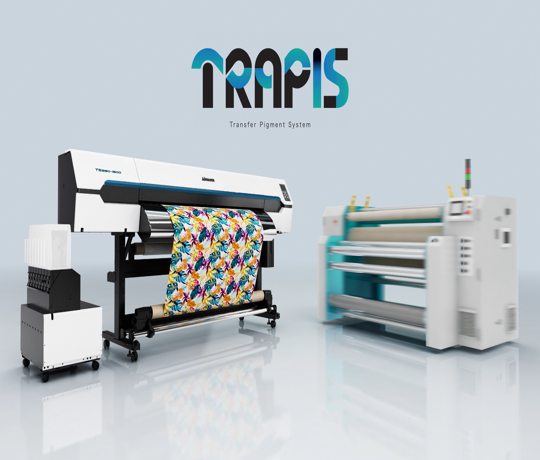
Trends in fashion are ever-evolving and unpredictable. For those companies working on the manufacturing side of these dynamic sectors, being at the forefront of the evolution and able to keep up with the rapid changes is key. Among others, dye sublimation printing technology has grown to become a must-have manufacturing tool when producing fashion. Why? Arguably, it enables users to achieve top quality with vibrant, consistent colours. It’s productive, efficient, cost-effective, easy to handle, and sustainable. To sum it up in one phrase, it ticks all the boxes. Digital sublimation printing is at the core of Italian company, Quicksilver. Specialised in manufacturing digital printed fabrics and garments for different textile market segments, the company has leveraged cutting-edge sublimation printing solutions to diversify and strengthen its production and achieve a leading market position. Quicksilver seamlessly moved from screen print transfer to inkjet transfer printing thanks to the extensive range of Mimaki technologies on offer. The company has now successfully built a healthy business, working side by side with fashion laboratories serving high-end fashion brands, as well as with premium sportswear brands. More recently, the company was faced with an increasingly competitive global market and all the changes and disruptions caused by COVID-19. To overcome the challenges, Quicksilver opted for a Mimaki Tiger-1800B MkIII, a cutting-edge industrial printer that brought in higher speeds, higher productivity, and unmatched quality, enabling the company to explore new opportunities and take the business to the next level. Surfing inkjet sublimation printing technology Quicksilver was established in 1987 in Padua (Italy) as a specialist in sublimation transfer through screen printing. Faced with this evolving market and the advent of inkjet technologies, the company quickly seized the opportunity and embraced the most advanced inkjet technologies to reshape and refresh the product portfolio and make its print applications more competitive and in line with market demand. “We identified the opportunity inkjet printing posed and knew we needed to go in that direction. Mimaki was our first choice – the JV Series was known at the time to be one of the best transfer printing options in the market and already featured a wide format size compared to competitors. And that has proved to be the right move”, explains Plinio Cecchin, founder and owner of Quicksilver. The company invested in its first Mimaki inkjet sublimation printers in 1997 through Bompan, an exclusive importer of Mimaki for Italy. Since then, Quicksilver has kept a keen focus on inkjet sublimation printing and continues to make further investments to this day, with Mimaki technologies at the forefront of its production processes. “Over the years we have explored all the options in the market and tried a few, but Mimaki remains the best choice for us. The innovations they constantly bring are perfectly in line with our needs and with the market demands.” Quicksilver discontinued screen printing about five years ago and now focuses on inkjet printing exclusively. With the objective to become a more versatile business and explore different textile applications, Quicksilver installed the Mimaki TS500-1800, a high-volume sublimation printer, and two Mimaki TS55-1800 – with one unit equipped with 10-litre tanks. Leveraging those printers, the company was able to increase its competitive edge and customer reach through a strong, diverse product offering and improved customer service. “Competing in the textile market is not easy for a mid-sized company. This is why selecting and choosing the right equipment was so crucial," explains Mr Cecchin. “We achieved unprecedented production efficiency in the first instance, due to the extremely comprehensive firmware from Mimaki, which provides the printing information in real time, enabling extreme efficiency and reducing risk of error. Mimaki cares about every detail, and this reflects in their product performance. This way, we have elevated our own service, which is now top quality, accurate and punctual.” Quicksilver has now consolidated its position as a leading supplier in sportswear, fashion, high-end fashion accessories market segments, as well as in the gaming and soft signage space. Its product portfolio ranges from technical sports clothing, printed apparels and garments, printed fabrics for luxury accessories like umbrellas, printed fabrics for gaming tables and soft signage applications. Besides a diverse product portfolio, the company also offers all-round services ranging from ‘print and transfer’, the supply of sublimation printed paper rolls and the transfer process only. The Era of the Tiger With a wealth of products and services on offer and a strong, reputable standing in relevant markets, Quicksilver looked to take the next step to overcome the new challenges posed by the outbreak of the COVID-19 pandemic. Higher volumes were in the company’s sights, so the management went on the hunt for an industrial, robust textile sublimation printing system. After exploring the different options available in the market, Quicksilver turned to the Mimaki Tiger-1800B MkIII and purchased a unit in May 2021 through Mimaki Bompan Textile, a joint venture between Mimaki and Bompan specialised in providing digital printing solutions for the textile and apparel market. According to Plinio Cecchin: “The ever-evolving textile printing market requires continuous investment. After the COVID-19 pandemic, the market changed dramatically and we felt the need to strengthen our competitive edge. We needed to efficiently increase the production volumes, while ensuring the high-quality standards we are known for are met. The Tiger-1800B MkIII fits all our requirements, and so did the customer service from Mimaki Bompan Textile.” A high-speed industrial sublimation textile inkjet printer, the Tiger-1800B MkIII features Mimaki’s advanced print technology to deliver highly stable performance, market-leading print speed, and stunning print quality for both direct and transfer printing. “Not only can we achieve consistent top quality at a higher speed, but also the printer features a robust body and an advanced conveyor belt engineered to transport the transfer paper, enabling safe loading of the jumbo rolls and higher image quality and precision,” explains Mr Cecchin. “The Mimaki Tiger-1800B MkIII proved extremely cost-effective, reliable, and efficient. In fact it has allowed us to produce higher, industrial volumes and so has completely transformed our business. We estimate that we have been able to cut the energy cost due to increased production efficiency. Additionally, using 10-liter ink tanks has generated savings of up to 25% on the costs of the inks, and likewise the jumbo rolls – which are extremely efficient to load and unload – further contributing to reducing production time.” Looking back over the past two years since the investment, Mr Cecchin adds: “Overall, the Mimaki Tiger-1800B MkIII has allowed our company to become more competitive in high-volume productions, which means that today we can address all the markets where we were not competitive in before”.
Read More
<< 32 of 52 >>
Image

ERP software for printing industry: Key benefits explained

Written by Pratik Shah, Creative Head - PrintXpand The printing industry work environment is very dynamic with accuracy, speed and control of cost playing major roles. The use of manual control over various print jobs, materials, machines and delivery schedules is prone to inefficiencies and errors. This is where the ERP for printing industry comes as a necessity and not fancy. Enterprise Resource Planning systems designed specifically for print businesses help centralize operations, improve visibility, and streamline workflows. From job estimation and production scheduling to inventory control and invoicing, ERP software plays a vital role in transforming how print companies operate. In this blog, we explore the key benefits of ERP software for printing industry and explain why it is becoming a core requirement for modern print businesses. Understanding ERP for Printing Industry ERP for printing industry is the centralized software platform that brings all the main business functions of a printing company to one platform. As opposed to generic ERP systems, print focused ERP solutions are designed to support industry unique issues like variable job specification, quick turnaround, and sophisticated costing designs. These systems often work alongside or integrate with print MIS software and web to print MIS platforms to create a seamless flow of data from order placement to final delivery. ERP systems bring together various departments within an organization such as sales, production, inventory, and finance hence providing consistency and transparency in operations. Common Challenges Faced by Print Businesses It is prudent to know the difficulties that print businesses encounter on a daily basis before learning the advantages of ERP software. Most printing companies are using spreadsheets or disjointed software to track orders and production. This causes poor job costing, wastage of materials, late deliveries as well as the absence of real time visibility. Manual scheduling can lead to machine downtimes or production bottlenecks. Any type of inventory mismanagement may result in excess stock or even a sudden out-of-stock of key materials. There is also the increased expectation of customers. Customers are pressuring them to deliver faster services, correct manufacturing costs and quality services. The inability to have a centralized system makes it harder and harder to live up to these expectations. This is where mis software for printing industry integrated with ERP brings significant value. Key Benefits of ERP Software for Printing Industry Streamlined Production Planning and Scheduling Enhanced production planning can be given as one of the most critical advantages of ERP for printing industry. The ERP systems enable print companies to schedule jobs according to the availability of machines, capacity of the workforce, and delivery dates. ERP minimizes the wastage of time through automation of job sequencing and production schedules to maximize utilization of resources. Managers will be able to monitor the progress of the jobs real-time and make immediate changes when priorities are shifted. Such control assists print firms to print in time. Accurate Job Costing and Quotation Management Proper costing is a significant issue in the printing business because of the changes in the prices of materials and the different specifications of the jobs. ERP software for printing industry enables real time job costing by factoring in materials, labor, machine time, and overheads. Using precise costing information, the sales teams are able to make accurate quotations within a short duration. This minimizes the chances of quoting the jobs at a lower cost or losing business on offers that take too long to respond to. Integrated print MIS software ensures that cost estimates align with actual production data, improving profitability. Improved Inventory and Material Management ERP systems give full access to the inventory stored in warehouses and production floors. Print businesses are able to monitor the raw materials e.g. paper, ink and plates in real time. Stockouts can be prevented by automation of reorder alerts and waste can be minimized by proper monitoring of consumption. This becomes particularly useful when the quantity of print jobs, or even custom jobs is high. By integrating ERP with mis software for the printing industry, companies gain tighter control over material usage and inventory costs. Enhanced Workflow Automation and Job Tracking ERP software automates some of the repetitive jobs like creating jobs, approving workflow and updating the status. This minimizes the number of errors in manual processes and enhances efficiency in operations. All departments operate on the same data which leads to improved coordination of the sales, production, and dispatch teams. Job tracking can be done in real time and is better at enhancing accountability and detecting early delays. When combined with web to print MIS, ERP creates a smooth flow from online order placement to production and delivery. Better Order Management and Delivery Accuracy Order management is a critical area where ERP software for printing industry delivers significant value. ERP systems trace all the order stages all the way through order entry and up to final dispatch. This guarantees good order filling and prompt deliveries. The customers are constantly informed about the status of the orders, and this enhances transparency and confidence. Better customer relationships are also achieved because it results in increased accuracy on delivery and reduction of reprints and customer complaints. Real Time Visibility and Reporting ERP systems have centralized dashboards and reports which make the management have a clear picture of the business performance. Real time availability of metrics like job profitability, production efficiency, material consumption and delivery timelines are available. This information based understanding assists decision makers to detect inefficiencies, manage expenses and strategize how money will be invested in the future. These insights can enable print businesses to scale operations in a strategic manner and react fast to market changes. Quality Control and Process Consistency It is paramount that the quality is kept with the printing industry. ERP software assists in the management of quality control through standardization of the workflow and keeping production records. The system may have quality checkpoints that would guarantee adherence to the internal standards and customer demands. Past job information assists in correcting the common problems and enhancing processes in the long run. This leads to the reduction of reworks and customer satisfaction. Improved Customer Satisfaction and Retention The customers are direct beneficiaries when print business runs smoothly. The improved turnaround time, correct pricing and guaranteed delivery times improve the overall customer experience. ERP system enhances interdepartmental communication which makes sure that the requirements of the customer are well understood and implemented. In the long-term this reliability creates long term relationships with customers as well as augmenting repeat business. Conclusion ERP for printing industry is now an important tool that businesses seek to implement in an attempt to enhance efficiency, cut costs and remain competitive. ERP software, by consolidating production planning, inventory management, job costing, and reporting, enhances the print operations, which previously were fragmented into different processes, into flowing operations. When combined with web to print MIS and print MIS software, ERP systems create a powerful digital foundation for growth and scalability. The ERP solution will be of great help to print businesses intending to modernise operations and provide customers with steady value. PrintXpand can assist digital transformation of the printing industry by providing expertise in companies that aim to acquire advanced print technology solutions and integrate these systems with each other.
1 of 52. >>
sidebar image
james Bond 50 50

Migrants Told: Stay in France or go back to your country

Lorem ipsum dolor sit amet, consectetur adipiscing elit. Nunc nisl risus, tristique diam id, blandit condimentum

READ MORE

DIARY


STAR products

  • Agfa Avinci CX3200

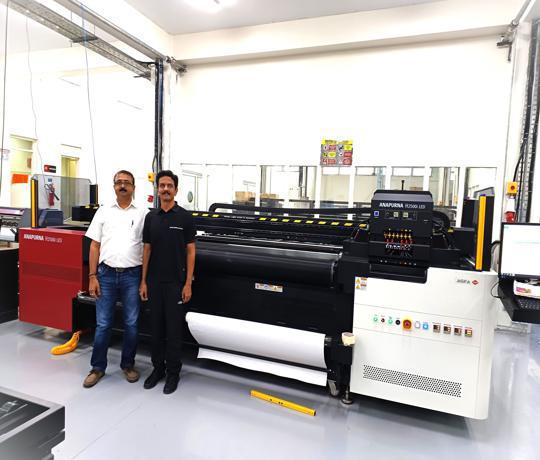
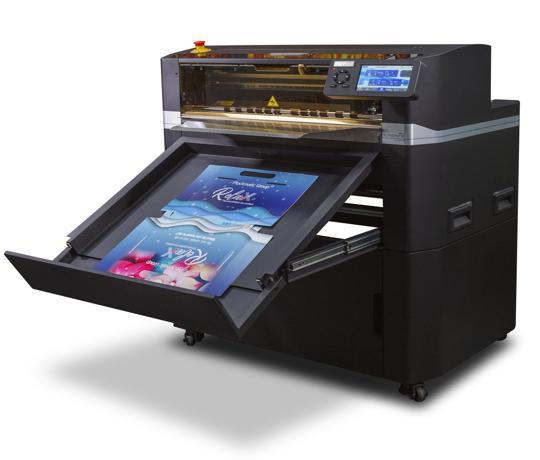
    Avinci CX3200 is 3.2 m wide dye sub textile printer capable of printing on polyester-based textiles What is it? Agfa’s Avinci CX3200 is a highly reliable and convenient soft signage printer that can print directly to fabrics and onto transfer paper. It uses an off-line calendar unit to ensure perfect fixation. Agfa’s dedicated dye sublimation roll-to-roll printer will enable you to create vibrant, high-quality prints on polyester-based fabrics up to 3.2 m wide, including a broad range of in- and outdoor soft signage applications, as well as interior decoration. The Avinci CX3200 boasts a rich color gamut and delivers deep black, perfect solids, accurate spot color mapping and smooth tonal rendering that is particularly noticeable in skin tones. The Avinci inks are characterised by their flexibility, image longevity and outdoor resistance. They offer stable jetting performance and deliver the same high-quality results, batch after batch. An off-line calender unit fixes the color deeply into the structure of the polyester-based fabrics while evaporating the carrier fluid. When was it launched at what are the target markets? It was launched on June 22, 2021, and aimed at soft signage industry, sports wear, fashion industry and home décor. Avinic CX3200 is a 3.2 m wide Dye Sub Textile printer capable of printing on polyester based textiles. Does it replace an earlier product? It replaces the earlier model of DX3200. The Avinci CX3200 is driven by Agfa’s Asanti wide-format workflow software. Color accuracy is provided by the easy-to-use color management. Using  their Calibrated Print Mode feature, new media can be calibrated and profiled in less than 15 minutes, after which the new profiles can be used to guarantee print quality. Asanti controls and automates the entire printing process from file intake to finishing, maximising productivity. Its comprehensive integration of file handling, color management and preflighting guarantees smooth and error-free jobs. The web-based Asanti Production Dashboard offers a view on your running production. It summarizes the jobs produced and reports on quantity printed, media usage, ink volumes enabling you to control your production and to manage your print shop optimally. What is the USP? It allows you to print directly on textiles and capable of print on transfer paper media as well. Single person media loading and low inks consumptions are another features. High productivity and a robust design for reliable printing at all times, vibrant prints and a wide color gamut; fine detail rendering; extensive applications scope; low ink consumption; convenient operations and a fast changeover between jobs are another features. Avinci produces good results with a minimum of jetted ink. This low ink consumption is based on Agfa’s renowned Thin Ink Layer technology: a smart combination of particular ink characteristics and our Asanti workflow software algorithms that tune the ink quantities perfectly to the required image quality mode. What training and support are available? Full in house training and support available from Agfa UAE and Belgium. Complete and integrated solution are available for printer, inks, workflow software, worldwide service and applications support. How productive is it? It prints at speed of 250 Sqm per hr on express mode. Being able to print directly to fabric is easy and ideal for fast handling and for special applications such as flags, where print-though is needed. Transfer paper allows for super sharp prints, eliminates any set-off, and limits media waste to a minimum. In addition, it extends the application scope to sportswear and fashion garments, as well as home décor prints on non-coated polyester fabrics. What does it cost? How is it sold? The recommended retail price (RRP) is approximately $220k stand alone printer and requires a separate calendaring unit. How many are in use? Currently, the latest CX3200 are around 11 units around the world. Specifications 3.2m Dye sublimation Printer Kyocera print heads 4 colour printer CYMK Direct to garment capable to print on transfer paper Max speed of 250 sqm Stand alone printer Resolution up to 600 x 1800 dpi Media types: Polyester-based fabrics, or transfer paper used to create banners, indoor wall graphics, shop decoration, outdoor advertising, light boxes, trade show displays, flags and high polyester-based blends “Agfa Avinci CX3200  was launched in June 2021.”
    Aug. 2, 2022

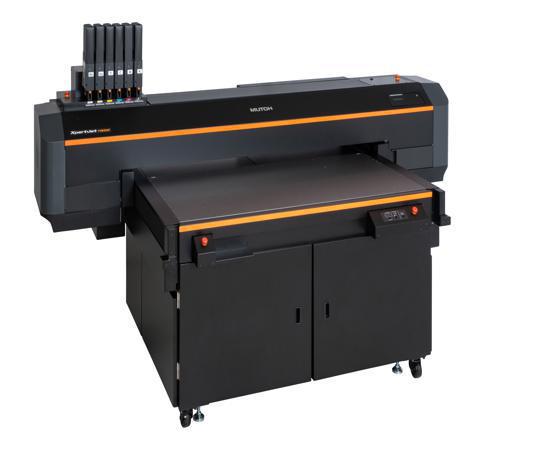
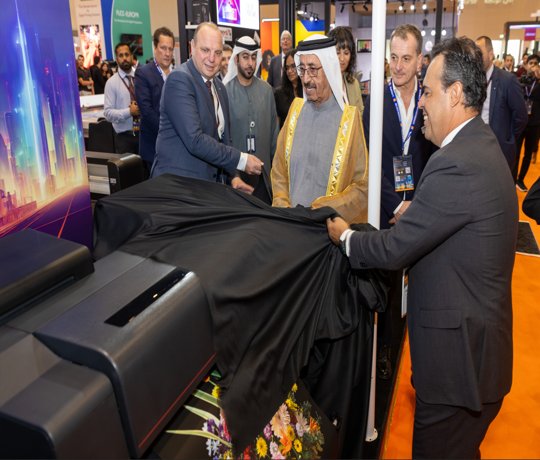
    Epson – SureColor SC V7000 Flatbed Printer

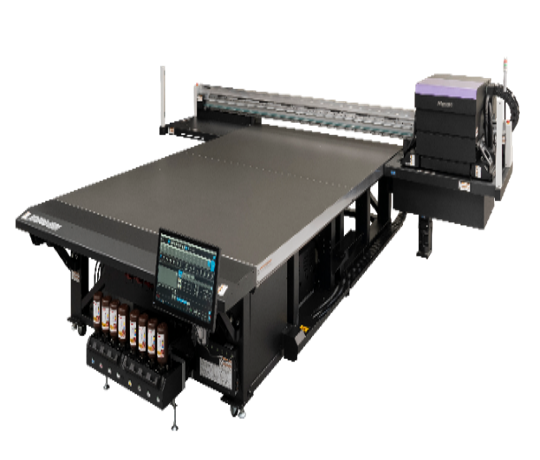
    Epson's first UV large format printer offers exceptional image quality, Shihab Zubair What is it? The SureColor SC-V7000 is Epson's first UV large format printer, offering exceptional image quality. The V7000 is ideal for printing eye-catching retail and outdoor signage, window displays, hoarding panels, packaging, promotional goods, and décor products. It includes Epson’s Micro Piezo printhead with ten newly developed original inks, for accurate colour reproduction for spot and corporate colours. It allows businesses the flexibility to print on a range of media up to 80mm thick including acrylics, polycarbonates, PVC, glass, aluminium, metal, polyester, foam board, styrene, wood and stone. The printhead layout enables simultaneous high-speed printing and, with the 4-zone vacuum system, it offers real flexibility for production environments. When was it launched at what are the target markets? The Epson SureColor SC-V7000 was launched in April 2021 within the Middle East region, building on the success of Epson’s award-winning range of SureColor S Series signage printers. The V7000 allows sign and display makers to expand their portfolio of products, to deliver high quality, fast and reliable results on a variety of different media. Does it replace an earlier product? The SureColor SC-V7000 proudly marks Epson’s entry into the UV flatbed signage print market. As Epson’s first UV large format printer, it provides unique features to differentiate and enhance our offering to the signage market. Every feature of the Epson SureColor SC-V7000 has been designed with the customer in mind. This is a robust and affordable UV LED flatbed signage printer capable of fast and quality printing on a wide range of media – any type of surface, despite the size, thickness, or weight. This is in addition to Epson’s successful product solutions such as the Epson SureColor SC Series of eco-solvent and resin ink printers. For instance, for environmentally friendly organisations, Epson’s SureColor SC-R5010 Series has the capacity to include a resin ink solution, offering print service providers and creative design agencies the ability to produce a wide range of signage in a more sustainable way, without compromising on the results. For a larger ink capacity, Epson offers the SureColor SC-R5010L. What is the USP? The Epson SureColor SC-V7000 provides exceptional image quality, productivity, usability, and safety. With the unique Epson Micro Piezo printhead, the printer has ten newly developed original inks and 3-layer high-speed printing. It helps print with ease and safety with automatic measurement of media thickness, a multi-zone vacuum, and a printhead crash prevent function, Epson Edge Print, proximity sensors. What training and support is available? Epson manufactures all the components for the SureColor SC-V7000, including printheads, inks and software, in order to reach the consistent quality levels that our customers expect. The Epson Cloud Solution PORT is a cloud-based system from where you will be able to monitor equipment across several sites, or several printers across one site, from the production floor or remotely, and assist the control of production. This enables efficient production planning, increased uptime and enhanced support. Epson Production Monitor is part of the Epson Cloud Solution PORT suite of apps and allows you to examine the production status in real-time. If an issue occurs, it can be corrected efficiently with minimal disruption to the print run. How productive is it? The SureColor SC-V7000 enables businesses to print at high speed with a maximum print area of 2.5 metres by 1.25 metres. The printhead layout enables simultaneous high-speed printing, with white ink and varnish, without losing productivity. What does it cost? How is it sold? The recommended retail price (RRP) is around AED 330,563 (US $90,000) and it is sold through authorised partners in the Middle East. How many are in use? Currently two printers have been installed in the UAE, and we are scheduled to install a few more in December and further into 2022. Specifications UltraChrome UV 10-colour inkset Printing resolution of 720 x 1,440 DPI Outstanding print quality High-speed simultaneous printing even when using white, colour and varnish Printheads, ink, firmware and software with an ink tank capacity of 1,000 ml  Price from AED 330,563 “Epson SureColor SC-V7000 was launched in April 2021.”

    Aug. 2, 2022
    • 1 of 4 >>
Top