Flashing News

Image

ERP software for printing industry: Key benefits explained

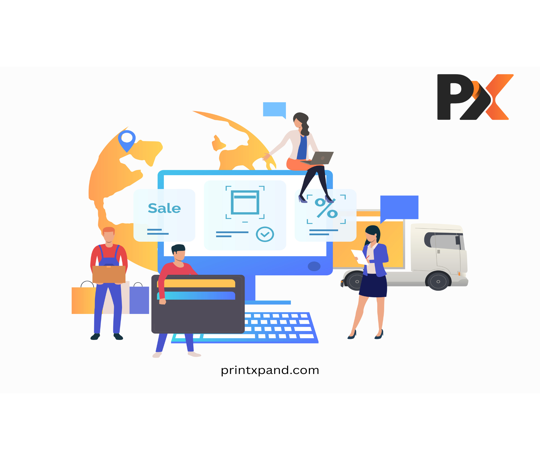
Written by Pratik Shah, Creative Head - PrintXpand The printing industry work environment is very dynamic with accuracy, speed and control of cost playing major roles. The use of manual control over various print jobs, materials, machines and delivery schedules is prone to inefficiencies and errors. This is where the ERP for printing industry comes as a necessity and not fancy. Enterprise Resource Planning systems designed specifically for print businesses help centralize operations, improve visibility, and streamline workflows. From job estimation and production scheduling to inventory control and invoicing, ERP software plays a vital role in transforming how print companies operate. In this blog, we explore the key benefits of ERP software for printing industry and explain why it is becoming a core requirement for modern print businesses. Understanding ERP for Printing Industry ERP for printing industry is the centralized software platform that brings all the main business functions of a printing company to one platform. As opposed to generic ERP systems, print focused ERP solutions are designed to support industry unique issues like variable job specification, quick turnaround, and sophisticated costing designs. These systems often work alongside or integrate with print MIS software and web to print MIS platforms to create a seamless flow of data from order placement to final delivery. ERP systems bring together various departments within an organization such as sales, production, inventory, and finance hence providing consistency and transparency in operations. Common Challenges Faced by Print Businesses It is prudent to know the difficulties that print businesses encounter on a daily basis before learning the advantages of ERP software. Most printing companies are using spreadsheets or disjointed software to track orders and production. This causes poor job costing, wastage of materials, late deliveries as well as the absence of real time visibility. Manual scheduling can lead to machine downtimes or production bottlenecks. Any type of inventory mismanagement may result in excess stock or even a sudden out-of-stock of key materials. There is also the increased expectation of customers. Customers are pressuring them to deliver faster services, correct manufacturing costs and quality services. The inability to have a centralized system makes it harder and harder to live up to these expectations. This is where mis software for printing industry integrated with ERP brings significant value. Key Benefits of ERP Software for Printing Industry Streamlined Production Planning and Scheduling Enhanced production planning can be given as one of the most critical advantages of ERP for printing industry. The ERP systems enable print companies to schedule jobs according to the availability of machines, capacity of the workforce, and delivery dates. ERP minimizes the wastage of time through automation of job sequencing and production schedules to maximize utilization of resources. Managers will be able to monitor the progress of the jobs real-time and make immediate changes when priorities are shifted. Such control assists print firms to print in time. Accurate Job Costing and Quotation Management Proper costing is a significant issue in the printing business because of the changes in the prices of materials and the different specifications of the jobs. ERP software for printing industry enables real time job costing by factoring in materials, labor, machine time, and overheads. Using precise costing information, the sales teams are able to make accurate quotations within a short duration. This minimizes the chances of quoting the jobs at a lower cost or losing business on offers that take too long to respond to. Integrated print MIS software ensures that cost estimates align with actual production data, improving profitability. Improved Inventory and Material Management ERP systems give full access to the inventory stored in warehouses and production floors. Print businesses are able to monitor the raw materials e.g. paper, ink and plates in real time. Stockouts can be prevented by automation of reorder alerts and waste can be minimized by proper monitoring of consumption. This becomes particularly useful when the quantity of print jobs, or even custom jobs is high. By integrating ERP with mis software for the printing industry, companies gain tighter control over material usage and inventory costs. Enhanced Workflow Automation and Job Tracking ERP software automates some of the repetitive jobs like creating jobs, approving workflow and updating the status. This minimizes the number of errors in manual processes and enhances efficiency in operations. All departments operate on the same data which leads to improved coordination of the sales, production, and dispatch teams. Job tracking can be done in real time and is better at enhancing accountability and detecting early delays. When combined with web to print MIS, ERP creates a smooth flow from online order placement to production and delivery. Better Order Management and Delivery Accuracy Order management is a critical area where ERP software for printing industry delivers significant value. ERP systems trace all the order stages all the way through order entry and up to final dispatch. This guarantees good order filling and prompt deliveries. The customers are constantly informed about the status of the orders, and this enhances transparency and confidence. Better customer relationships are also achieved because it results in increased accuracy on delivery and reduction of reprints and customer complaints. Real Time Visibility and Reporting ERP systems have centralized dashboards and reports which make the management have a clear picture of the business performance. Real time availability of metrics like job profitability, production efficiency, material consumption and delivery timelines are available. This information based understanding assists decision makers to detect inefficiencies, manage expenses and strategize how money will be invested in the future. These insights can enable print businesses to scale operations in a strategic manner and react fast to market changes. Quality Control and Process Consistency It is paramount that the quality is kept with the printing industry. ERP software assists in the management of quality control through standardization of the workflow and keeping production records. The system may have quality checkpoints that would guarantee adherence to the internal standards and customer demands. Past job information assists in correcting the common problems and enhancing processes in the long run. This leads to the reduction of reworks and customer satisfaction. Improved Customer Satisfaction and Retention The customers are direct beneficiaries when print business runs smoothly. The improved turnaround time, correct pricing and guaranteed delivery times improve the overall customer experience. ERP system enhances interdepartmental communication which makes sure that the requirements of the customer are well understood and implemented. In the long-term this reliability creates long term relationships with customers as well as augmenting repeat business. Conclusion ERP for printing industry is now an important tool that businesses seek to implement in an attempt to enhance efficiency, cut costs and remain competitive. ERP software, by consolidating production planning, inventory management, job costing, and reporting, enhances the print operations, which previously were fragmented into different processes, into flowing operations. When combined with web to print MIS and print MIS software, ERP systems create a powerful digital foundation for growth and scalability. The ERP solution will be of great help to print businesses intending to modernise operations and provide customers with steady value. PrintXpand can assist digital transformation of the printing industry by providing expertise in companies that aim to acquire advanced print technology solutions and integrate these systems with each other.

1 of 52. >>
Image

ERP software for printing industry: Key benefits explained

Written by Pratik Shah, Creative Head - PrintXpand The printing industry work environment is very dynamic with accuracy, speed and control of cost playing major roles. The use of manual control over various print jobs, materials, machines and delivery schedules is prone to inefficiencies and errors. This is where the ERP for printing industry comes as a necessity and not fancy. Enterprise Resource Planning systems designed specifically for print businesses help centralize operations, improve visibility, and streamline workflows. From job estimation and production scheduling to inventory control and invoicing, ERP software plays a vital role in transforming how print companies operate. In this blog, we explore the key benefits of ERP software for printing industry and explain why it is becoming a core requirement for modern print businesses. Understanding ERP for Printing Industry ERP for printing industry is the centralized software platform that brings all the main business functions of a printing company to one platform. As opposed to generic ERP systems, print focused ERP solutions are designed to support industry unique issues like variable job specification, quick turnaround, and sophisticated costing designs. These systems often work alongside or integrate with print MIS software and web to print MIS platforms to create a seamless flow of data from order placement to final delivery. ERP systems bring together various departments within an organization such as sales, production, inventory, and finance hence providing consistency and transparency in operations. Common Challenges Faced by Print Businesses It is prudent to know the difficulties that print businesses encounter on a daily basis before learning the advantages of ERP software. Most printing companies are using spreadsheets or disjointed software to track orders and production. This causes poor job costing, wastage of materials, late deliveries as well as the absence of real time visibility. Manual scheduling can lead to machine downtimes or production bottlenecks. Any type of inventory mismanagement may result in excess stock or even a sudden out-of-stock of key materials. There is also the increased expectation of customers. Customers are pressuring them to deliver faster services, correct manufacturing costs and quality services. The inability to have a centralized system makes it harder and harder to live up to these expectations. This is where mis software for printing industry integrated with ERP brings significant value. Key Benefits of ERP Software for Printing Industry Streamlined Production Planning and Scheduling Enhanced production planning can be given as one of the most critical advantages of ERP for printing industry. The ERP systems enable print companies to schedule jobs according to the availability of machines, capacity of the workforce, and delivery dates. ERP minimizes the wastage of time through automation of job sequencing and production schedules to maximize utilization of resources. Managers will be able to monitor the progress of the jobs real-time and make immediate changes when priorities are shifted. Such control assists print firms to print in time. Accurate Job Costing and Quotation Management Proper costing is a significant issue in the printing business because of the changes in the prices of materials and the different specifications of the jobs. ERP software for printing industry enables real time job costing by factoring in materials, labor, machine time, and overheads. Using precise costing information, the sales teams are able to make accurate quotations within a short duration. This minimizes the chances of quoting the jobs at a lower cost or losing business on offers that take too long to respond to. Integrated print MIS software ensures that cost estimates align with actual production data, improving profitability. Improved Inventory and Material Management ERP systems give full access to the inventory stored in warehouses and production floors. Print businesses are able to monitor the raw materials e.g. paper, ink and plates in real time. Stockouts can be prevented by automation of reorder alerts and waste can be minimized by proper monitoring of consumption. This becomes particularly useful when the quantity of print jobs, or even custom jobs is high. By integrating ERP with mis software for the printing industry, companies gain tighter control over material usage and inventory costs. Enhanced Workflow Automation and Job Tracking ERP software automates some of the repetitive jobs like creating jobs, approving workflow and updating the status. This minimizes the number of errors in manual processes and enhances efficiency in operations. All departments operate on the same data which leads to improved coordination of the sales, production, and dispatch teams. Job tracking can be done in real time and is better at enhancing accountability and detecting early delays. When combined with web to print MIS, ERP creates a smooth flow from online order placement to production and delivery. Better Order Management and Delivery Accuracy Order management is a critical area where ERP software for printing industry delivers significant value. ERP systems trace all the order stages all the way through order entry and up to final dispatch. This guarantees good order filling and prompt deliveries. The customers are constantly informed about the status of the orders, and this enhances transparency and confidence. Better customer relationships are also achieved because it results in increased accuracy on delivery and reduction of reprints and customer complaints. Real Time Visibility and Reporting ERP systems have centralized dashboards and reports which make the management have a clear picture of the business performance. Real time availability of metrics like job profitability, production efficiency, material consumption and delivery timelines are available. This information based understanding assists decision makers to detect inefficiencies, manage expenses and strategize how money will be invested in the future. These insights can enable print businesses to scale operations in a strategic manner and react fast to market changes. Quality Control and Process Consistency It is paramount that the quality is kept with the printing industry. ERP software assists in the management of quality control through standardization of the workflow and keeping production records. The system may have quality checkpoints that would guarantee adherence to the internal standards and customer demands. Past job information assists in correcting the common problems and enhancing processes in the long run. This leads to the reduction of reworks and customer satisfaction. Improved Customer Satisfaction and Retention The customers are direct beneficiaries when print business runs smoothly. The improved turnaround time, correct pricing and guaranteed delivery times improve the overall customer experience. ERP system enhances interdepartmental communication which makes sure that the requirements of the customer are well understood and implemented. In the long-term this reliability creates long term relationships with customers as well as augmenting repeat business. Conclusion ERP for printing industry is now an important tool that businesses seek to implement in an attempt to enhance efficiency, cut costs and remain competitive. ERP software, by consolidating production planning, inventory management, job costing, and reporting, enhances the print operations, which previously were fragmented into different processes, into flowing operations. When combined with web to print MIS and print MIS software, ERP systems create a powerful digital foundation for growth and scalability. The ERP solution will be of great help to print businesses intending to modernise operations and provide customers with steady value. PrintXpand can assist digital transformation of the printing industry by providing expertise in companies that aim to acquire advanced print technology solutions and integrate these systems with each other.

1 of 52. >>
sidebar image
Editor

ERP software for printing industry: Key benefits explained

Written by Pratik Shah, Creative Head - PrintXpand The printing industry work environment is very dynamic with accuracy, speed and control of cost playing major roles. The use of manual control over various print jobs, materials, machines and delivery schedules is prone to inefficiencies and errors. This is where the ERP for printing industry comes as a necessity and not fancy. Enterprise Resource Planning systems designed specifically for print businesses help centralize operations, improve visibility, and streamline workflows. From job estimation and production scheduling to inventory control and invoicing, ERP software plays a vital role in transforming how print companies operate. In this blog, we explore the key benefits of ERP software for printing industry and explain why it is becoming a core requirement for modern print businesses. Understanding ERP for Printing Industry ERP for printing industry is the centralized software platform that brings all the main business functions of a printing company to one platform. As opposed to generic ERP systems, print focused ERP solutions are designed to support industry unique issues like variable job specification, quick turnaround, and sophisticated costing designs. These systems often work alongside or integrate with print MIS software and web to print MIS platforms to create a seamless flow of data from order placement to final delivery. ERP systems bring together various departments within an organization such as sales, production, inventory, and finance hence providing consistency and transparency in operations. Common Challenges Faced by Print Businesses It is prudent to know the difficulties that print businesses encounter on a daily basis before learning the advantages of ERP software. Most printing companies are using spreadsheets or disjointed software to track orders and production. This causes poor job costing, wastage of materials, late deliveries as well as the absence of real time visibility. Manual scheduling can lead to machine downtimes or production bottlenecks. Any type of inventory mismanagement may result in excess stock or even a sudden out-of-stock of key materials. There is also the increased expectation of customers. Customers are pressuring them to deliver faster services, correct manufacturing costs and quality services. The inability to have a centralized system makes it harder and harder to live up to these expectations. This is where mis software for printing industry integrated with ERP brings significant value. Key Benefits of ERP Software for Printing Industry Streamlined Production Planning and Scheduling Enhanced production planning can be given as one of the most critical advantages of ERP for printing industry. The ERP systems enable print companies to schedule jobs according to the availability of machines, capacity of the workforce, and delivery dates. ERP minimizes the wastage of time through automation of job sequencing and production schedules to maximize utilization of resources. Managers will be able to monitor the progress of the jobs real-time and make immediate changes when priorities are shifted. Such control assists print firms to print in time. Accurate Job Costing and Quotation Management Proper costing is a significant issue in the printing business because of the changes in the prices of materials and the different specifications of the jobs. ERP software for printing industry enables real time job costing by factoring in materials, labor, machine time, and overheads. Using precise costing information, the sales teams are able to make accurate quotations within a short duration. This minimizes the chances of quoting the jobs at a lower cost or losing business on offers that take too long to respond to. Integrated print MIS software ensures that cost estimates align with actual production data, improving profitability. Improved Inventory and Material Management ERP systems give full access to the inventory stored in warehouses and production floors. Print businesses are able to monitor the raw materials e.g. paper, ink and plates in real time. Stockouts can be prevented by automation of reorder alerts and waste can be minimized by proper monitoring of consumption. This becomes particularly useful when the quantity of print jobs, or even custom jobs is high. By integrating ERP with mis software for the printing industry, companies gain tighter control over material usage and inventory costs. Enhanced Workflow Automation and Job Tracking ERP software automates some of the repetitive jobs like creating jobs, approving workflow and updating the status. This minimizes the number of errors in manual processes and enhances efficiency in operations. All departments operate on the same data which leads to improved coordination of the sales, production, and dispatch teams. Job tracking can be done in real time and is better at enhancing accountability and detecting early delays. When combined with web to print MIS, ERP creates a smooth flow from online order placement to production and delivery. Better Order Management and Delivery Accuracy Order management is a critical area where ERP software for printing industry delivers significant value. ERP systems trace all the order stages all the way through order entry and up to final dispatch. This guarantees good order filling and prompt deliveries. The customers are constantly informed about the status of the orders, and this enhances transparency and confidence. Better customer relationships are also achieved because it results in increased accuracy on delivery and reduction of reprints and customer complaints. Real Time Visibility and Reporting ERP systems have centralized dashboards and reports which make the management have a clear picture of the business performance. Real time availability of metrics like job profitability, production efficiency, material consumption and delivery timelines are available. This information based understanding assists decision makers to detect inefficiencies, manage expenses and strategize how money will be invested in the future. These insights can enable print businesses to scale operations in a strategic manner and react fast to market changes. Quality Control and Process Consistency It is paramount that the quality is kept with the printing industry. ERP software assists in the management of quality control through standardization of the workflow and keeping production records. The system may have quality checkpoints that would guarantee adherence to the internal standards and customer demands. Past job information assists in correcting the common problems and enhancing processes in the long run. This leads to the reduction of reworks and customer satisfaction. Improved Customer Satisfaction and Retention The customers are direct beneficiaries when print business runs smoothly. The improved turnaround time, correct pricing and guaranteed delivery times improve the overall customer experience. ERP system enhances interdepartmental communication which makes sure that the requirements of the customer are well understood and implemented. In the long-term this reliability creates long term relationships with customers as well as augmenting repeat business. Conclusion ERP for printing industry is now an important tool that businesses seek to implement in an attempt to enhance efficiency, cut costs and remain competitive. ERP software, by consolidating production planning, inventory management, job costing, and reporting, enhances the print operations, which previously were fragmented into different processes, into flowing operations. When combined with web to print MIS and print MIS software, ERP systems create a powerful digital foundation for growth and scalability. The ERP solution will be of great help to print businesses intending to modernise operations and provide customers with steady value. PrintXpand can assist digital transformation of the printing industry by providing expertise in companies that aim to acquire advanced print technology solutions and integrate these systems with each other.
Read More
1 of 52 >>
Image

ERP software for printing industry: Key benefits explained

Written by Pratik Shah, Creative Head - PrintXpand The printing industry work environment is very dynamic with accuracy, speed and control of cost playing major roles. The use of manual control over various print jobs, materials, machines and delivery schedules is prone to inefficiencies and errors. This is where the ERP for printing industry comes as a necessity and not fancy. Enterprise Resource Planning systems designed specifically for print businesses help centralize operations, improve visibility, and streamline workflows. From job estimation and production scheduling to inventory control and invoicing, ERP software plays a vital role in transforming how print companies operate. In this blog, we explore the key benefits of ERP software for printing industry and explain why it is becoming a core requirement for modern print businesses. Understanding ERP for Printing Industry ERP for printing industry is the centralized software platform that brings all the main business functions of a printing company to one platform. As opposed to generic ERP systems, print focused ERP solutions are designed to support industry unique issues like variable job specification, quick turnaround, and sophisticated costing designs. These systems often work alongside or integrate with print MIS software and web to print MIS platforms to create a seamless flow of data from order placement to final delivery. ERP systems bring together various departments within an organization such as sales, production, inventory, and finance hence providing consistency and transparency in operations. Common Challenges Faced by Print Businesses It is prudent to know the difficulties that print businesses encounter on a daily basis before learning the advantages of ERP software. Most printing companies are using spreadsheets or disjointed software to track orders and production. This causes poor job costing, wastage of materials, late deliveries as well as the absence of real time visibility. Manual scheduling can lead to machine downtimes or production bottlenecks. Any type of inventory mismanagement may result in excess stock or even a sudden out-of-stock of key materials. There is also the increased expectation of customers. Customers are pressuring them to deliver faster services, correct manufacturing costs and quality services. The inability to have a centralized system makes it harder and harder to live up to these expectations. This is where mis software for printing industry integrated with ERP brings significant value. Key Benefits of ERP Software for Printing Industry Streamlined Production Planning and Scheduling Enhanced production planning can be given as one of the most critical advantages of ERP for printing industry. The ERP systems enable print companies to schedule jobs according to the availability of machines, capacity of the workforce, and delivery dates. ERP minimizes the wastage of time through automation of job sequencing and production schedules to maximize utilization of resources. Managers will be able to monitor the progress of the jobs real-time and make immediate changes when priorities are shifted. Such control assists print firms to print in time. Accurate Job Costing and Quotation Management Proper costing is a significant issue in the printing business because of the changes in the prices of materials and the different specifications of the jobs. ERP software for printing industry enables real time job costing by factoring in materials, labor, machine time, and overheads. Using precise costing information, the sales teams are able to make accurate quotations within a short duration. This minimizes the chances of quoting the jobs at a lower cost or losing business on offers that take too long to respond to. Integrated print MIS software ensures that cost estimates align with actual production data, improving profitability. Improved Inventory and Material Management ERP systems give full access to the inventory stored in warehouses and production floors. Print businesses are able to monitor the raw materials e.g. paper, ink and plates in real time. Stockouts can be prevented by automation of reorder alerts and waste can be minimized by proper monitoring of consumption. This becomes particularly useful when the quantity of print jobs, or even custom jobs is high. By integrating ERP with mis software for the printing industry, companies gain tighter control over material usage and inventory costs. Enhanced Workflow Automation and Job Tracking ERP software automates some of the repetitive jobs like creating jobs, approving workflow and updating the status. This minimizes the number of errors in manual processes and enhances efficiency in operations. All departments operate on the same data which leads to improved coordination of the sales, production, and dispatch teams. Job tracking can be done in real time and is better at enhancing accountability and detecting early delays. When combined with web to print MIS, ERP creates a smooth flow from online order placement to production and delivery. Better Order Management and Delivery Accuracy Order management is a critical area where ERP software for printing industry delivers significant value. ERP systems trace all the order stages all the way through order entry and up to final dispatch. This guarantees good order filling and prompt deliveries. The customers are constantly informed about the status of the orders, and this enhances transparency and confidence. Better customer relationships are also achieved because it results in increased accuracy on delivery and reduction of reprints and customer complaints. Real Time Visibility and Reporting ERP systems have centralized dashboards and reports which make the management have a clear picture of the business performance. Real time availability of metrics like job profitability, production efficiency, material consumption and delivery timelines are available. This information based understanding assists decision makers to detect inefficiencies, manage expenses and strategize how money will be invested in the future. These insights can enable print businesses to scale operations in a strategic manner and react fast to market changes. Quality Control and Process Consistency It is paramount that the quality is kept with the printing industry. ERP software assists in the management of quality control through standardization of the workflow and keeping production records. The system may have quality checkpoints that would guarantee adherence to the internal standards and customer demands. Past job information assists in correcting the common problems and enhancing processes in the long run. This leads to the reduction of reworks and customer satisfaction. Improved Customer Satisfaction and Retention The customers are direct beneficiaries when print business runs smoothly. The improved turnaround time, correct pricing and guaranteed delivery times improve the overall customer experience. ERP system enhances interdepartmental communication which makes sure that the requirements of the customer are well understood and implemented. In the long-term this reliability creates long term relationships with customers as well as augmenting repeat business. Conclusion ERP for printing industry is now an important tool that businesses seek to implement in an attempt to enhance efficiency, cut costs and remain competitive. ERP software, by consolidating production planning, inventory management, job costing, and reporting, enhances the print operations, which previously were fragmented into different processes, into flowing operations. When combined with web to print MIS and print MIS software, ERP systems create a powerful digital foundation for growth and scalability. The ERP solution will be of great help to print businesses intending to modernise operations and provide customers with steady value. PrintXpand can assist digital transformation of the printing industry by providing expertise in companies that aim to acquire advanced print technology solutions and integrate these systems with each other.
1 of 52. >>
sidebar image
james Bond 50 50

Migrants Told: Stay in France or go back to your country

Lorem ipsum dolor sit amet, consectetur adipiscing elit. Nunc nisl risus, tristique diam id, blandit condimentum

READ MORE

DIARY


STAR products

  • Star product: Zaikio Print Connectivity Platform

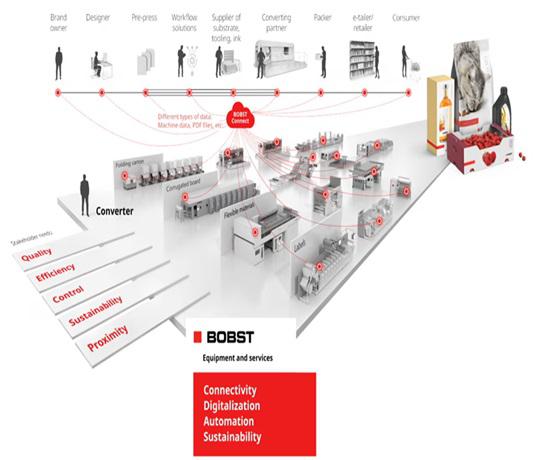
    What does Zaikio do? Zaikio is a “print-specific connectivity platform,” intended to allow everyone in the print industry to link their systems together, whether printer, software vendor or supplier. End-users can access its connectivity for free, though they can buy compatible Zaikio or third-party products through an app store. According to Zaikio’s partner success manager Karl Ciz, who will handle UK enquiries, it will allow “print-related data to be shared on a level playing field for the first time”. In simple terms, it’s an alternative to JDF that should allow user-level plug-and-play connectivity between systems from different manufacturers – JDF promised but never delivered plug-and-play.
    Aug. 2, 2022

    Star product: Sitma 1150-FP Fast Pack

    What does it do? Sitma’s introduction of the FP-version of its 1150 wrapping machine last year proved prescient in a way that couldn’t be predicted. FP stands for Fast Pack and this model is particularly suited to wrapping variable-sized ‘e-commerce’ goods for mail and courier delivery that have boomed this year. Sitma’s website points out that it can wrap packs of facemasks. The first 1150-FP to be ordered has gone to the US, to “one of the largest e-commerce companies in the world,” that Sitma won’t name but it’s easy to guess. The Fast Pack can also be used for conventional paper or film wrapping of direct mail and publications. When was it launched and what is the target market? Sitma is an Italian company. Its 1150 wrapping line was introduced in 2007 and is one of several wrappers in its range, offering different speeds and price points. All are sold in the UK though Engelmann & Buckham. The Fast Pack was announced last year as a new configuration, joining the existing 1150-FW-PK model, for either paper or polywrapping of printed media; and the PK dedicated to paper wrapping. Richard MacLean, the director at Engelmann & Buckham specialising in Sitma products, says that the Fast Pack is aimed squarely at e-commerce fulfilment, but could help existing DM houses branch out into fulfilment of items other than flat printed papers. Sitma has also recently introduced a dedicated e-commerce fulfilment polywrapper called e-commerce 2.0, which handles single or multiple items of varying shapes and sizes and forms bags around them on the fly. How does it work? The Fast Pack model is primarily intended to wrap using strong brown kraft paper as an automated replacement for hand wrapping or boxing of products, especially variable height flat items such as books, CDs and DVDs. White paper or polywrap can also be used, but is thought less likely in use. Items can be hand-fed on a conveyor into the wrapping area. In 2018 Sitma demonstrated a corobot load/unload unit offline at a mailing exhibition, and now lists this as an option for most of its wrap lines. A barcode reader is used to ensure data integrity with matching of the contents to outer addresses. A label printer-applicator or inline direct inkjet printer can be fitted for addressing and other personalisation.
    Aug. 2, 2022
Top